Entering the U.S. in the age of tariffs and reshoring
Trade policy is reshaping how overseas companies come to America. What has changed, what hasn't, and how to build a U.S. entry plan that holds up.
 Emilio Fernandez, Owner & CEO
· 4 min read

For most of my career, the question overseas leaders asked me about the U.S. was whether to come. Today the question is how: export, partner, acquire or build. Trade policy has moved that decision from the strategy offsite to the board agenda, and it has made a good U.S. entry plan more valuable, not less.
What the data says
Two public datasets tell the story. The first is reshoring and foreign direct investment (FDI) in manufacturing. The Reshoring Initiative's 2025 Annual Report recorded about 247,000 announced U.S. manufacturing jobs from reshoring and FDI combined in 2025. The same report found that companies citing tariffs as a reason for reshoring rose more than twelvefold from 2024. After the Supreme Court ruled in February 2026 that the International Emergency Economic Powers Act did not authorize the administration's tariffs, policy uncertainty continued and tariff citations declined in the first half of 2026. The report is careful to add that this does not mean tariffs stopped mattering: tariffs of 15 percent are often enough to offset the manufacturing cost difference versus other developed countries.
The second is how foreign companies actually invest. According to the U.S. Bureau of Economic Analysis, first-year expenditures by foreign direct investors to acquire, establish or expand U.S. businesses totaled $232.2 billion in 2025, up 49.5 percent from 2024. Acquisitions accounted for $218.4 billion of that. Greenfield investment, meaning new businesses and expansions, was $13.8 billion.
Read together, the message is clear. Interest in being in the U.S., not just selling to it, is strong. And most of the money arrives by buying an existing business rather than building one from scratch.
What has changed for overseas companies
Three things stand out from my conversations with leaders planning a U.S. move.
Landed cost is now a strategic variable. When tariffs can change faster than a planning cycle, a business case built on a single cost assumption is fragile. Good plans now model several trade scenarios and decide in advance what the company would do in each.
Local presence carries more weight. Customers, distributors and, in healthcare, payers increasingly ask where the product is made and who stands behind it in the U.S. A credible U.S. team, even a small one, changes those conversations.
The entry model matters as much as the market. Exporting through a distributor, licensing to a U.S. partner, acquiring a local company and building your own operation each carry very different exposure to trade policy, capital needs and speed.
What has not changed
Tariffs get the headlines, but they rarely decide whether a U.S. entry succeeds. The fundamentals I have seen make or break U.S. businesses are the same as ever: a sharp choice of first customers, a value story that works for American buyers, the right first hires, and the discipline to sequence the launch instead of trying to win everywhere at once.
In regulated industries such as healthcare, the regulatory pathway, reimbursement and distribution still set the timeline. A tariff advantage does not shorten an FDA review or win a payer contract.
Four moves for a resilient U.S. entry plan
1. Decide the entry model deliberately. Lay out export, partner, acquire and build side by side. Score each on speed, capital, control and exposure to trade policy. The BEA data is a reminder that acquisition is the most common route for foreign investors, but it is not automatically the right one for you.
2. Build the business case on scenarios, not a forecast. Model at least a base case and a stressed case for landed cost. Agree the triggers that would move you from one entry model to another, such as from export to local assembly.
3. Put a senior U.S. leader in the seat early. Someone who knows how American customers, channels and, where relevant, payers make decisions. This is often the single highest-return hire in the plan, and it can start as a fractional role.
4. Sequence, then scale. Pick the first region, segment or channel where you can win clearly. Prove the model, then expand. Trade policy may change again; a business that is already winning with real customers is far better placed to adapt.
The formula view
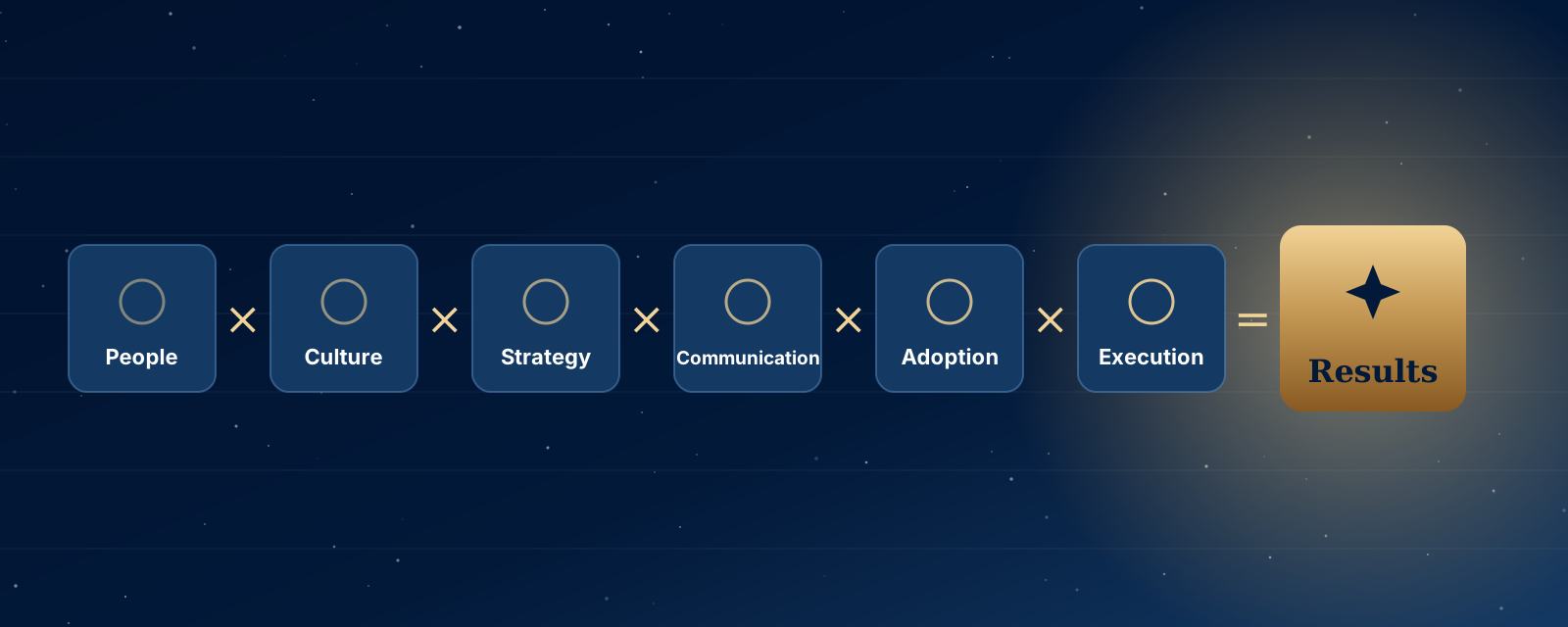
I look at every U.S. entry through the Scalar Formula: People × Culture × Strategy × Communication × Adoption × Execution = Results. Tariffs mostly test Strategy and Execution. But the entries I have seen stall usually fail on People (the wrong first leader) or Adoption (a headquarters team that never fully bought into how different the U.S. market is). Because the factors multiply, a strong tariff strategy cannot rescue a zero elsewhere.
The U.S. remains the world's largest and most rewarding market for companies that prepare for it. The climate has changed. The case for a well-sequenced, well-led entry has only become stronger.
Sources
- Reshoring Initiative, 2025 Annual Report (published October 2026)
- U.S. Bureau of Economic Analysis, New Foreign Direct Investment in the United States, 2025 (June 2026)
Figures are as reported by the sources above, accessed October 2026.